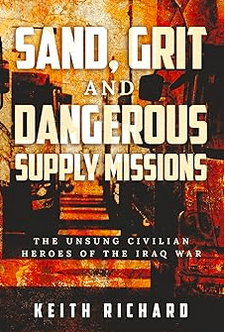
When Keith Richard accepted a job offer in 2003 to support U.S. military operations in Iraq and Kuwait, he never imagined it would place him in the center of one of the most dangerous missions of the Iraq War. A civilian with no military background, Richard found himself leading a massive logistical effort under fire—making split-second decisions, managing life-or-death missions, and carrying the emotional weight of sending fellow civilians into combat zones.
Now, in his new memoir Sand, Grit and Dangerous Supply Missions: The Unsung Civilian Heroes of the Iraq War, Richard sheds light on the hidden sacrifices of thousands of non-military personnel who risked everything in support of America’s war effort.
“Civilians are the unsung heroes of the Iraq War and should be recognized for their patriotism and commitment,” Richard said.
Raised on the Mississippi Gulf Coast, Richard was a devoted husband and father when he took on the role of logistics coordinator through the Department of Defense’s LOGCAP (Logistics Civil Augmentation Program). Tasked with leading operations for the defense contractor Kellogg Brown & Root, Richard became responsible for a fleet of over 700 fuel and supply trucks navigating some of the most volatile terrain in Iraq.
The work was grueling—and often deadly. Civilian drivers under his command faced roadside bombs, ambushes, and sniper fire. The risks were enormous, and the consequences deeply personal. Richard’s leadership would later be scrutinized as part of a congressional inquiry into wartime contractor abuses, followed by a billion-dollar lawsuit from the families of fallen and wounded drivers.
Through it all, Richard wrestled with his own trauma, the weight of decisions made under pressure, and the silence surrounding the civilian cost of war.
Sand, Grit and Dangerous Supply Missions offers a rare and candid look into the realities faced by civilian contractors—men and women who served without recognition, often returning home scarred and unsupported.
“The reality and toll of civilian lives during and after a war needs to be recognized,” Richard said. “Many civilians have been killed, injured, and mentally impacted supporting the U.S. military—without the same benefits or acknowledgment given to our troops.”