PHOTO CREDIT: Terra40
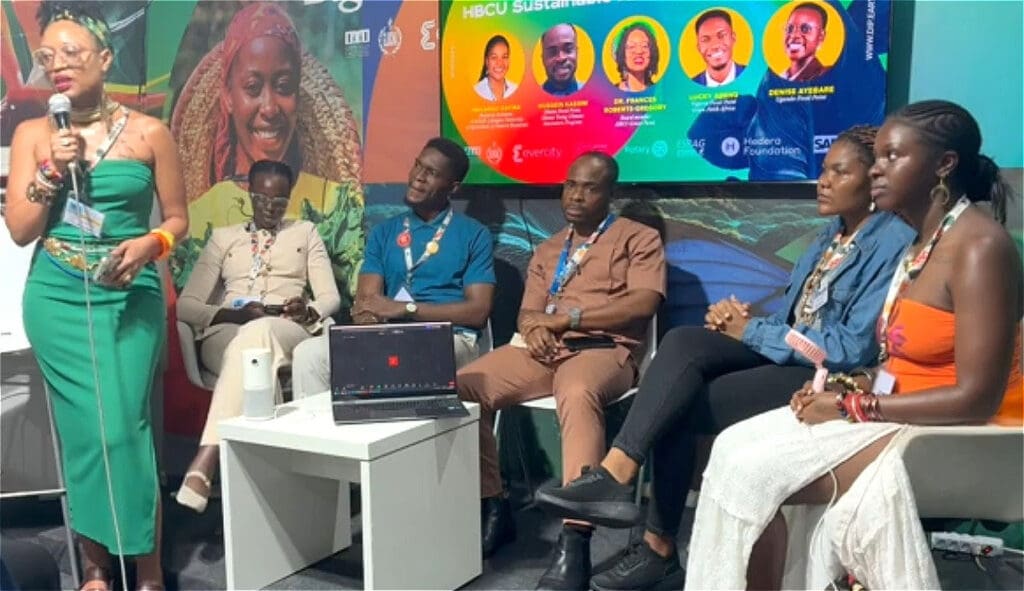
At COP30 in Belém, Brazil, the HBCU Green Fund, in partnership with its youth-led Sustainable Africa Futures Network, connected climate leaders from 18 countries to showcase innovative youth-driven solutions and launch the global Power of 10 Campaign. The initiative aims to raise $10 for every HBCU student to support climate projects in frontline communities, empowering young people to shape the future of climate justice.
“Today is the global launch of our Power of 10 Campaign,” said Felicia Davis, founder of the Green Fund, in a press release. “With over two million Black college students in the U.S., why not 10x our ambition? This campaign belongs to the youth—they will decide how these resources are used, and our job is to support their vision for real climate justice.”
Moderated by Green Fund board member Dr. Frances Roberts-Gregory, the hybrid event included on-site panelists from Uganda, Ghana, Malawi, and Nigeria, along with virtual participants from across the United States. Delegates highlighted transformative projects already underway with Green Fund support:
In Uganda, Denise Ayebare and her team at Better Life International are using digital tools like the Soil App to help refugee farmers assess soil health, improve crop yields, and access real markets—strengthening resilience for displaced communities.
In Ghana, Hussein Kassim’s youth-led initiatives include low-cost zero-emission transport prototypes, circular-economy plastic recycling, and climate-smart agriculture pilots, demonstrating how small grants can produce scalable, community-centered solutions.
In Malawi, Malango Kayira’s Green Schools, Green Future program has planted 10,000 trees across five primary schools while training youth on climate stewardship and negotiation skills, cultivating the next generation of climate leaders.
In Nigeria, Lucky Abeng’s EcoSteward Humanitarian Foundation equips rural and urban youth with adaptation skills—from drought-resilient farming to flood response—and runs climate-justice education programs for students, building awareness and resilience in frontline communities.
Although a fire at the COP30 venue prevented the formal delivery of the African Youth Climate Justice Statement, the youth continued to advocate for key demands: honoring Loss and Damage commitments, canceling climate debt, expanding funding for youth-led renewable energy and agroecology projects, and safeguarding Indigenous lands.
The Power of 10 Campaign, guided by the principle that small, collective contributions can drive large-scale impact, marks a new chapter in HBCU Green Fund’s mission: amplifying youth leadership, creating practical climate solutions, and connecting African and U.S. students in a global movement for climate justice.
For more information, visit HBCU Green Fund.