As companies approach the midyear mark, many leaders are reassessing priorities in a workplace increasingly shaped by artificial intelligence. While more than half of organizations now integrate AI into core operations, new research suggests the biggest challenge isn’t the technology itself—it’s the human side of change.
According to a Harvard Business Impact report, the top obstacle companies face is building a culture that can adapt quickly without overwhelming employees. That’s where experts like Anne Grady say leadership must evolve.
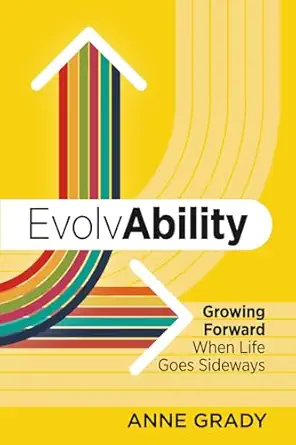
Grady, a TEDx speaker and author of EvolvAbility: Growing Forward When Life Goes Sideways, argues that the future of leadership is less about control and more about connection. As AI takes over routine tasks, the skills that remain uniquely human—resilience, empathy, and adaptability—are becoming the real competitive advantage.
“Leaders can’t outpace technology,” her work suggests, “but they can out-human it.”
One of the biggest misconceptions, Grady notes, is that adapting quickly means pushing people harder. In reality, constant pressure can lead to burnout, reduced productivity, and disengagement. Instead, she advocates for what she calls “sustainable adaptability”—the ability to respond to change without exhausting teams.
That starts with emotional intelligence. Leaders who understand how stress impacts performance are better equipped to support their teams through uncertainty. Creating space for reflection, encouraging open communication, and modeling calm under pressure can help employees stay grounded—even as demands shift.
Another key focus is influence. In fast-changing environments, authority alone is no longer enough to drive results. Leaders must be able to build trust, inspire action, and guide teams through ambiguity. That requires clear communication and a willingness to listen—skills that can’t be automated.
Grady also emphasizes the importance of redefining success. Rather than measuring output alone, organizations are beginning to value adaptability, learning, and well-being as indicators of long-term performance. This shift is especially relevant as new graduates enter the workforce, facing an environment where roles and expectations are constantly evolving.
For leaders conducting midyear reviews, the message is clear: technical upgrades must be matched with human investment. Training programs, leadership development, and workplace culture all play a role in preparing teams for what’s next.
As conference and planning season ramps up, many organizations are rethinking how they approach leadership altogether. The question is no longer just how to implement AI—but how to lead people through it.
In a landscape defined by rapid change, the leaders who succeed may not be the fastest or most efficient—but the most adaptable, empathetic, and connected.