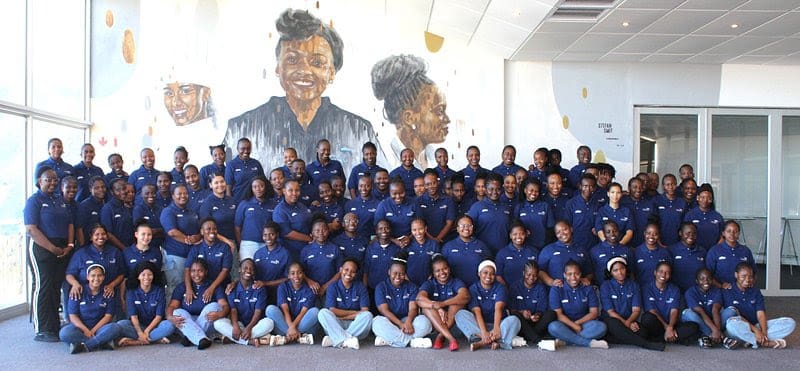
One five-star hotel in South Africa is demonstrating how tourism can become a powerful pathway to economic opportunity for women from rural communities.
Drostdy Hotel, a heritage property in Robert Sobukwe, formerly Graaff-Reinet, in South Africa’s Eastern Cape, is doing more than welcoming luxury travelers. The hotel serves as a working training ground for the South African College for Tourism (SACT), an institution established to provide unemployed young women from rural communities with professional hospitality training.
Founded in 2001 by Dr. Anton Rupert, SACT was created with a focus on economic empowerment and professional development. Its model places students inside an operating five-star hotel rather than limiting their education to classrooms or simulated hospitality environments.
That distinction can make a significant difference.
Students work with real guests, real reservations and the daily challenges of a functioning luxury property. They gain experience handling the expectations of paying customers while learning the standards required in high-end hospitality.
The hotel and college are also united under the leadership of Tebello Polisane-Casper, executive director of both institutions. Her own career provides an example of the path students can take. Polisane-Casper began in hospitality as a student waiter and has spent 16 years in the industry.
Her leadership role allows the college’s educational mission and the hotel’s operational demands to work together, creating a direct connection between training and employment.
For Polisane-Casper, having women in leadership is also an important part of the model. She sees female executives as role models who can demonstrate the resilience, confidence and skills needed to succeed in an industry where women remain underrepresented in senior positions.
The impact can be seen among the hotel’s employees. Anra Smith began her career at Drostdy as an intern reservationist and, 16 years later, serves as the hotel’s Wine Shop and Events Manager.
Smith says effective leadership requires listening, patience and helping employees perform at their best. She also emphasizes the importance of creating an environment where students can learn from mistakes while developing the confidence to work in a demanding industry.
The model offers a different perspective on luxury hospitality. Instead of treating a heritage hotel simply as a destination, Drostdy has turned its operations into a bridge between education and opportunity.
As South Africa marks Women’s Day, the Drostdy-SACT partnership illustrates how empowerment can move beyond discussion. By putting young women directly into the hospitality environment and giving them experience they can take into their careers, the program is helping build a pipeline of future hospitality professionals and leaders.