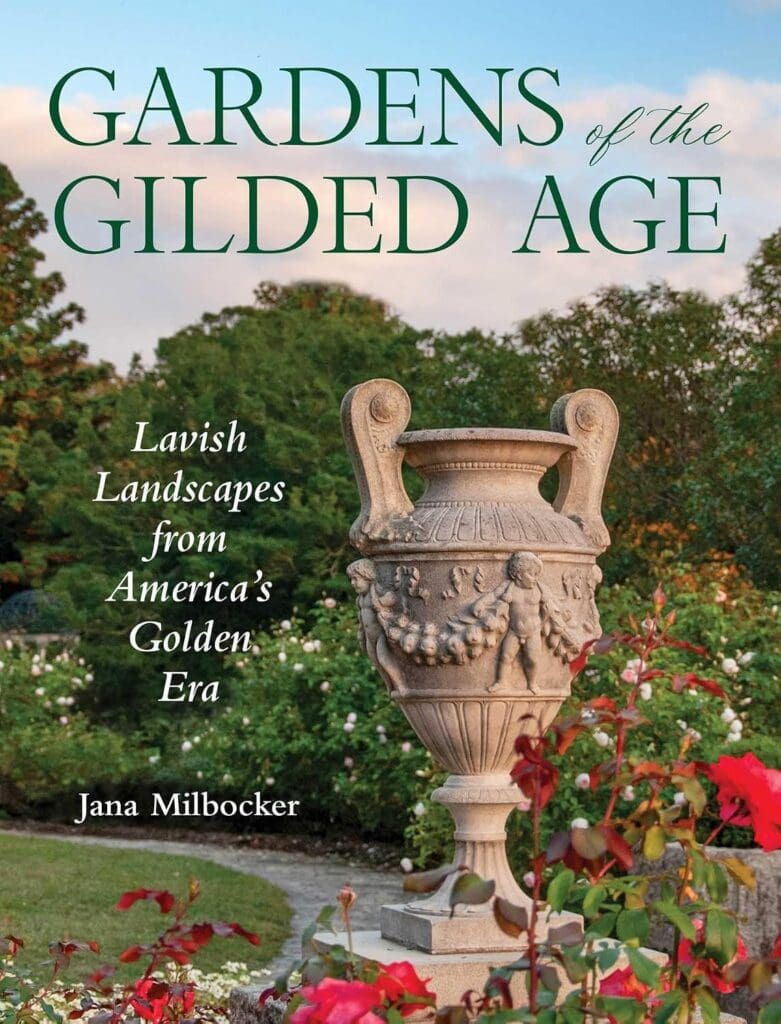
With HBO’s The Gilded Age returning for its fourth season this fall, interest in the extravagant world of America’s wealthiest families is once again taking center stage. For travelers looking to experience that history beyond the television screen, a new book offers a guide to some of the era’s most spectacular—and surprisingly accessible—legacies.
In Gardens of the Gilded Age: Lavish Landscapes from America’s Golden Era, garden designer, speaker and travel writer Jana Milbocker explores 30 historic estates and gardens stretching from New England to Florida. The properties, once private retreats of some of America’s richest families, are now open to the public and offer opportunities for summer day trips.
The Gilded Age, spanning roughly 1870 to 1920, is often remembered for enormous mansions, extravagant parties and the rise of industrial fortunes. But the competition for status extended well beyond architecture. Wealthy families also invested enormous sums in gardens, importing plants, commissioning elaborate landscapes and creating private outdoor spaces designed to rival the grandest gardens of Europe.
Milbocker’s book explores that botanical competition through contemporary photography, archival images and stories about the people behind the estates. Each profile examines the evolution of the landscape, architectural details and personalities of the owners.
Among the featured destinations is The Mount in Lenox, Massachusetts, the former home of celebrated author Edith Wharton. In Asheville, North Carolina, Biltmore Estate, created by George Vanderbilt, provides one of the most recognizable examples of Gilded Age ambition.
Newport, Rhode Island’s The Elms, built for coal baron Edward Berwind, features a French-inspired mansion and classical Italian gardens. Longwood Gardens in Kennett Square, Pennsylvania, developed by Pierre S. du Pont, encompasses expansive grounds, conservatories and elaborate fountain displays.
Visitors can also explore Nemours Estate in Wilmington, Delaware, whose formal gardens were inspired by the Palace of Versailles, as well as Old Westbury Gardens on Long Island, the former estate of steel heir John S. Phipps.
In Miami, Vizcaya, created for businessman James Deering, offers another distinctly lavish interpretation of the era with its Italian Renaissance-inspired architecture and gardens overlooking Biscayne Bay.
According to Milbocker, the landscapes were shaped by international travel, plant-hunting expeditions, technological advances and intense competition among wealthy families.
What makes these properties especially compelling today is that many have transitioned from symbols of private wealth into public spaces where visitors can experience their gardens firsthand.
Published by Globe Pequot, Gardens of the Gilded Age was released June 2, 2026. For travelers intrigued by history, architecture, horticulture or the opulence portrayed in The Gilded Age, the book provides a roadmap to exploring some of America’s most remarkable surviving landscapes.