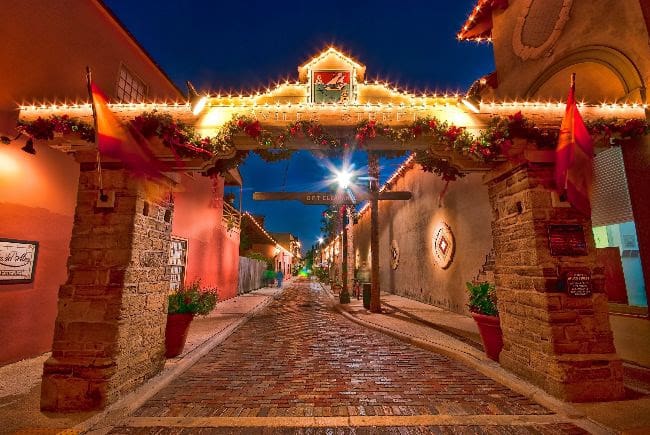
More than 460 years after its founding, St. Augustine continues to showcase the Hispanic heritage that has shaped its identity and remains woven into the city’s architecture, food, religious traditions and cultural experiences.
Founded in 1565, St. Augustine is the nation’s oldest continuously occupied European-established city. Its Spanish Colonial roots can be seen throughout the historic district, where centuries-old buildings, landmarks and neighborhoods tell the story of the city’s multicultural past.
Among the city’s historic sites is the Cathedral Basilica of St. Augustine, connected to the nation’s first Catholic parish, established in 1565. Mission Nombre de Dios also commemorates the early Spanish mission in the region.
The city’s history also includes Fort Mose Historic State Park, recognized as the site of the first legally sanctioned free Black settlement in what is now the United States. Established under Spanish rule, Fort Mose became a refuge for formerly enslaved people seeking freedom.
Architecture provides another window into St. Augustine’s past. The Castillo de San Marcos National Monument, Plaza de la Constitución and Cathedral Basilica feature the distinctive coquina stone associated with the city’s Spanish Colonial history.
Other landmarks reflect later cultural influences. Flagler College occupies the former Ponce de Leon Hotel, a Gilded Age landmark featuring Spanish Renaissance Revival architecture, elaborate courtyards and Tiffany stained-glass windows. The Villa Zorayda Museum draws inspiration from Spain’s Alhambra Palace, while Casa Monica Resort & Spa incorporates Moroccan-inspired design.
Visitors can also explore El Camino de Santiago Florida, a pilgrimage route inspired by Spain’s famous Camino de Santiago. The route connects important religious and historic sites, including the Shrine of Our Lady of La Leche at Mission Nombre de Dios and the Cathedral Basilica. Visitors can collect passport stamps while exploring the city’s religious and cultural history.
St. Augustine’s cultural identity extends to its food. Spanish, Minorcan, Cuban, Latin American and Southern influences have created a diverse culinary scene that includes historic restaurants, neighborhood eateries and chef-driven destinations.
Visitors can sample Minorcan cuisine and seafood at Columbia Restaurant, explore Peruvian-inspired dishes at Llama Restaurant or experience Cuban coffee, pastries and sandwiches at The Cuban Café & Bakery.
The city’s cultural tourism also includes walking tours, artisan markets, festivals, museums, locally owned shops and galleries, providing opportunities to connect with artists, historians and entrepreneurs.
For travelers seeking experiences that combine history and contemporary culture, St. Augustine offers a destination where the past remains part of everyday life. From Spanish Colonial landmarks and centuries-old religious traditions to multicultural food and community-based experiences, the city continues to tell the story of its Hispanic heritage while adding new chapters to its cultural legacy.