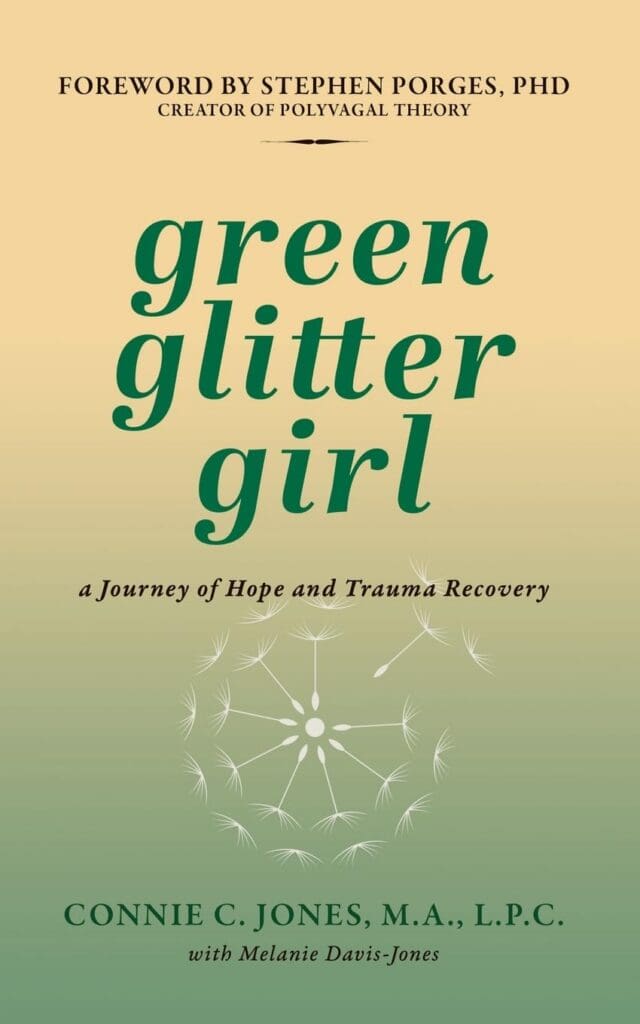
For people living with the effects of childhood trauma, understanding why certain emotional and behavioral patterns persist can be an important part of the recovery process. Psychotherapist Connie Jones explores that connection in her new book, Green Glitter Girl: A Journey of Hope and Trauma Recovery, combining her personal experience as a trauma survivor with more than three decades of work as a therapist.
Jones was just 3 years old when she unknowingly witnessed the death of her younger sister. Raised by severely depressed parents, she later experienced abuse, neglect and medical emergencies that continued into adulthood. Years later, her experiences would inform her work with patients navigating the lasting effects of trauma.
Through Green Glitter Girl, Jones examines how extreme stress can affect the brain and nervous system and why trauma responses can sometimes remain long after the original danger has passed. Rather than viewing these reactions simply as behaviors that need to be overcome, she encourages readers to develop a greater understanding of how the body responds to perceived threats.
The book explores the role of nervous system science in understanding trauma, including how deeply stressful experiences can influence feelings of safety, connection and self-worth. Jones also addresses the possibility of changing long-established patterns through greater self-awareness and self-compassion.
The foreword is written by Stephen Porges, Ph.D., creator of Polyvagal Theory. His perspective highlights the nervous system’s ability to adapt in response to challenging circumstances and its potential role in the healing process.
Jones says her goal is to offer hope to readers who may feel overwhelmed by persistent beliefs, behaviors or habits that developed in response to earlier experiences.
“I want to instill hope that, although readers may feel overwhelmed and stuck within their limited beliefs and self-sabotaging habits, they can be free from them,” Jones said.
The book draws from Jones’ own story while also reflecting her clinical experience. She has spent 34 years working as a psychotherapist and developed an individualized approach to psychotherapy through her private practice.
A graduate of Duke University with a degree in psychology, Jones has worked with patients dealing with trauma and its lasting effects. She lives in St. Louis with her husband, Harry, whom she has been married to for 30 years.
Green Glitter Girl: A Journey of Hope and Trauma Recovery is published by Torchflame Books and is available through Amazon. The book is positioned as a resource for readers interested in trauma recovery, nervous system science, self-understanding and developing greater compassion for themselves.