As the U.S. Supreme Court considers a major climate case that could influence efforts to hold fossil-fuel companies accountable for climate-related damages, environmental advocates, scientists and community leaders gathered in New York for the 6th Annual BIPOC Climate Justice Summit.
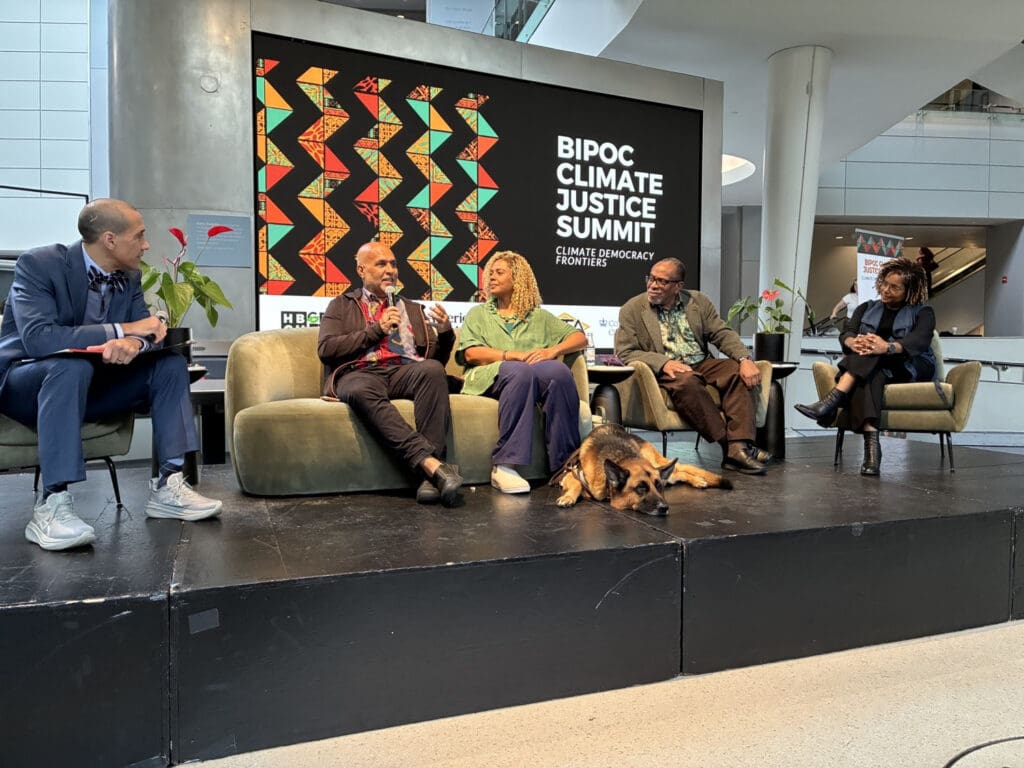
Held during Climate Week NYC at the American Museum of Natural History, the summit, titled Climate Democracy Frontiers, focused on community power, public trust, environmental accountability and the role of frontline communities in shaping climate solutions.
The event was convened by the HBCU Green Fund and ACE Observatory, alongside the National Technical Association, Columbia Climate School and numerous frontline organizations.
Felicia Davis, founder of the HBCU Green Fund, said the summit provides a platform for communities disproportionately affected by climate change to help shape solutions and challenge systems that contribute to environmental inequity. She emphasized that accountability is an important part of the discussion as questions surrounding corporate responsibility reach the nation’s highest court.
The program opened with remarks from Chase Iron Eyes, an attorney, activist and member of the Oglala Lakota Nation, who highlighted the importance of solidarity in advancing climate justice.
Dr. Isatis Cintrón-Rodríguez, climate scientist and director of ACE Observatory, stressed the importance of ensuring that frontline communities are decision-makers rather than simply participants in climate discussions. The summit brought together perspectives from the U.S. mainland, Puerto Rico and international communities, including Albania, Seychelles, the Marshall Islands and Samoa.
One panel, Truth Is a Climate Issue: Defending Science, Information, and Democracy, examined how media coverage, misinformation and political messaging influence public understanding of climate change. Speakers included Dr. Genevieve Guenther, author of The Language of Climate Politics, and Jessica Cruz of the New York City Mayor’s Office of Climate and Environmental Justice.
The summit also recognized the 100th anniversary of the National Technical Association, highlighting the contributions of Black professionals in science, technology, engineering and mathematics. American Museum of Natural History President Dr. Sean M. Decatur introduced a panel featuring physicist Hattie Carwell, research geneticist Dr. Shelia Stiles, nuclear engineer Gary Harris and marine biologist Dr. Ambrose Jearld.
Other discussions explored education, clean energy, environmental extraction, climate financing and the role of culture and art in environmental advocacy. Attendees also experienced an eco-fashion presentation by designer Monsurat Amoo and a performance by chef and eco-hip-hop artist DJ Cavem.
The closing panel, The Future Belongs to Us, called for stronger collaboration, greater frontline leadership and coordinated international action.
Organizers said the summit underscored the importance of placing community knowledge, participation and accountability at the center of climate policy and environmental decision-making.