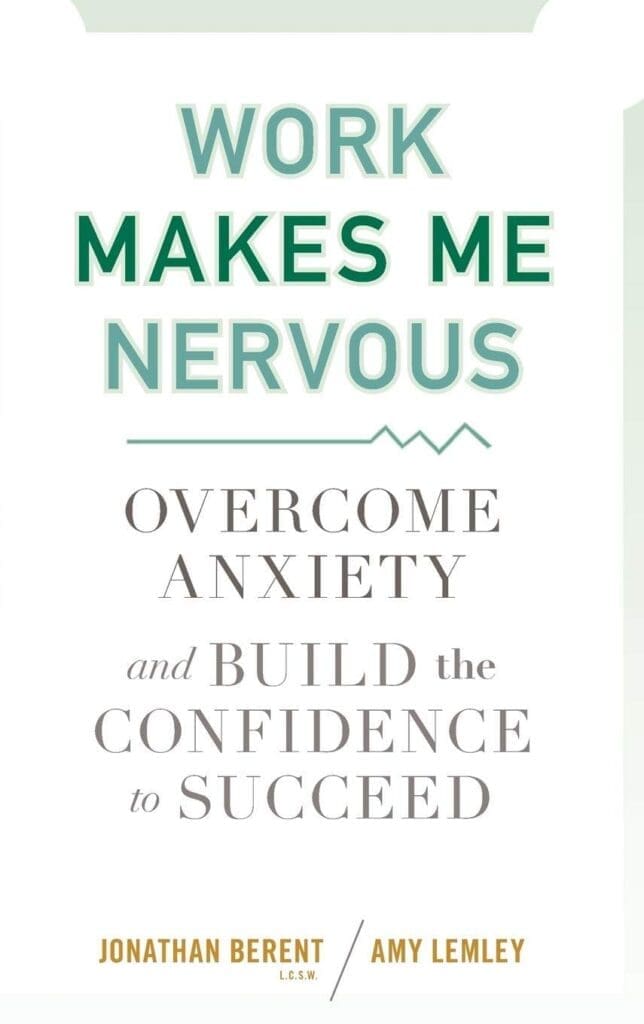
Workplace stress is nothing new—but for many professionals, the real obstacle isn’t the workload. It’s the fear of being visibly nervous when it matters most. Whether it’s speaking in meetings, presenting to leadership, or interviewing for a new role, anxiety can quietly derail careers. Psychotherapist Jonathan Berent is taking aim at that challenge with his book Work Makes Me Nervous: Overcome Anxiety and Build the Confidence to Succeed.
Drawing on decades of clinical experience treating social anxiety disorders, Berent focuses on a problem he says is widely misunderstood—and often hidden. While occasional nerves are normal, persistent anxiety tied to performance can lead professionals to avoid opportunities, underperform, or remain stuck in roles that don’t reflect their true abilities.
At the core of the book is a structured 21-day program designed to help readers understand and manage their anxiety in real-world situations. Rather than offering quick-fix solutions, Berent emphasizes practical, repeatable techniques that can be applied in high-pressure moments. His approach blends self-awareness, mental conditioning, and physiological control—particularly around adrenaline, which he argues can be harnessed rather than feared.
The book outlines a step-by-step system that begins with identifying specific anxiety triggers and patterns. From there, readers are guided through exercises to balance their mental state, regulate physical responses, and gradually build what Berent calls a “high-performance mind.” Central to this process is learning how to control adrenaline, transforming it from a source of panic into a tool for focus and energy.
What sets Work Makes Me Nervous apart is its use of real-life case studies. Berent draws on examples ranging from entry-level employees to executives, as well as figures in sports and media, to illustrate how performance anxiety shows up across industries—and how it can be managed. The message is clear: anxiety at work is not a personal failing, but a challenge that can be addressed with the right tools.
Berent also points to a larger issue—many people struggling with workplace anxiety never seek help. Embarrassment and avoidance often keep them silent, even when the problem affects their professional growth and overall well-being.
Published by Wiley, the book arrives at a time when conversations around mental health in the workplace are becoming more open, yet still incomplete. Berent’s contribution is a practical one: a roadmap for professionals who want to show up fully, perform effectively, and stop letting anxiety dictate their career trajectory.
For those navigating high-stakes moments on the job, Work Makes Me Nervous offers something both simple and powerful—the belief that confidence can be built, one day at a time.