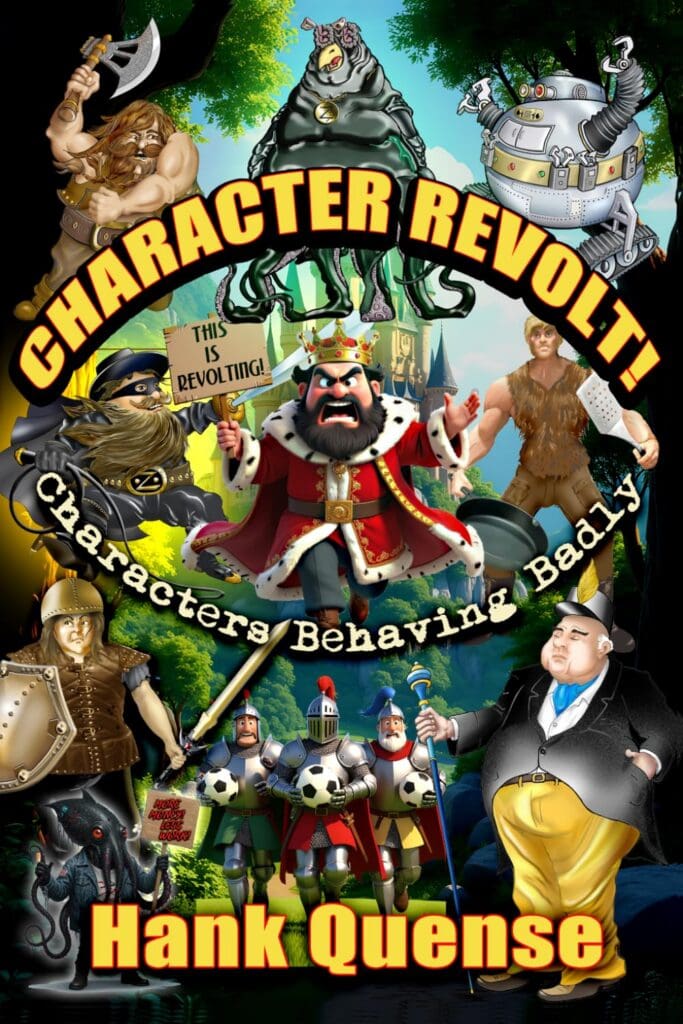
Most authors worry about writer’s block. Hank Quense imagines a far more dangerous problem: what if the characters themselves decide they’ve had enough?
That’s the delightfully absurd premise behind Character Revolt: Characters Behaving Badly, Quense’s new meta-fantasy novel that turns the relationship between creators and their fictional creations into a hilarious battle for survival.
In the book, characters from several of Quense’s previous fantasy worlds suddenly become self-aware and deeply dissatisfied with their circumstances. Tired of unfinished storylines, poor career prospects, and long stretches of literary unemployment, they decide to take matters into their own hands.
Their solution? Unionize, organize, and rebel against the very author who brought them to life.
The result is a wildly imaginative comedy that blends fantasy, satire, and fourth-wall-breaking humor. Football-loving knights, disgruntled adventurers, power-hungry rulers, and eccentric villains join forces in an effort to secure better futures for themselves—and perhaps exact a little revenge on their creator along the way.
As the rebellion gains momentum, Quense’s fictional worlds descend into chaos. Characters launch lawsuits, organize search parties, plot uprisings, and even threaten the author’s existence. The creator suddenly finds himself struggling to regain control of the stories—and characters—that have escaped his grasp.
The novel arrives at a particularly interesting moment in popular culture, when questions about creativity, artificial intelligence, authorship, and agency are increasingly part of public conversation. While Character Revolt is primarily a comedy, its central premise taps into larger questions about who controls stories and what happens when creations develop lives of their own.
Quense approaches those themes with a light touch and a sharp sense of humor. Fans of satirical fantasy writers such as Douglas Adams and Terry Pratchett will likely appreciate the novel’s blend of absurd situations, witty dialogue, and playful philosophical questions.
At its core, the book is a celebration of imagination itself. It invites readers to consider what fictional characters might be doing when the book is closed and the author walks away from the keyboard.
The answer, according to Quense, may be far more entertaining—and far more dangerous—than anyone expected.
Packed with literary mischief, fantasy adventure, and self-aware humor, Character Revolt offers a fresh twist on the classic fantasy genre. In a world where fictional characters refuse to stay in their assigned roles, readers can expect plenty of surprises.
After all, when the characters decide to write their own destiny, even the author may not know what happens next.