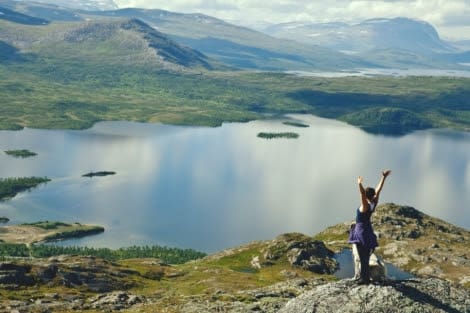
As Europe contends with another summer of extreme heat, Sweden is offering travelers a different way to experience the season, combining cooler temperatures with long daylight hours, outdoor adventures and some surprisingly unconventional experiences.
The Scandinavian country is gaining attention as travelers increasingly consider climate and weather when deciding where to spend their summer vacations. While parts of southern Europe face record-breaking temperatures, Sweden’s northern landscapes provide an opportunity to escape the heat while exploring forests, lakes, mountains and the Arctic.
Northern Sweden is particularly appealing to travelers looking for an active summer getaway. Long daylight hours make it possible to hike well into the evening, while expansive wilderness areas offer opportunities for hiking, cycling, kayaking and other outdoor activities. The region’s natural scenery also provides a stark contrast to the crowded beaches and overheated cities that have become synonymous with summer travel in some parts of Europe.
The shift comes as climate concerns increasingly influence travel decisions. Visit Sweden points to its own research, along with findings from the European Travel Commission, showing that weather and climate conditions are becoming increasingly relevant factors for travelers planning European trips.
But Sweden’s summer appeal goes beyond escaping the heat.
In Gothenburg, researchers are taking a closer look at another question: Can a roller coaster actually make people happier?
A new research initiative at Liseberg amusement park is bringing together researchers from the Stockholm School of Economics, Karolinska Institutet and the London School of Economics to examine how shared experiences can influence happiness, social connection and overall well-being.
More than 1,000 participants are expected to take part as “Citizen Researchers,” helping scientists explore whether experiences such as riding roller coasters with friends or loved ones can strengthen relationships and contribute to greater happiness.
The research adds a distinctly Swedish twist to the broader global conversation about well-being. Rather than focusing solely on traditional measures of happiness, researchers are examining how shared experiences and social connections may affect how people feel.
Together, these developments highlight a broader shift in how travelers are thinking about summer. The ideal vacation is no longer necessarily defined by scorching temperatures and crowded European hotspots. For some travelers, it may mean cooler weather, open landscapes, meaningful experiences and opportunities to reconnect with other people.
From the hiking trails of Arctic Sweden to the roller coasters of Gothenburg, the country is making a case for a summer vacation that is cooler, more active and perhaps even a little happier.