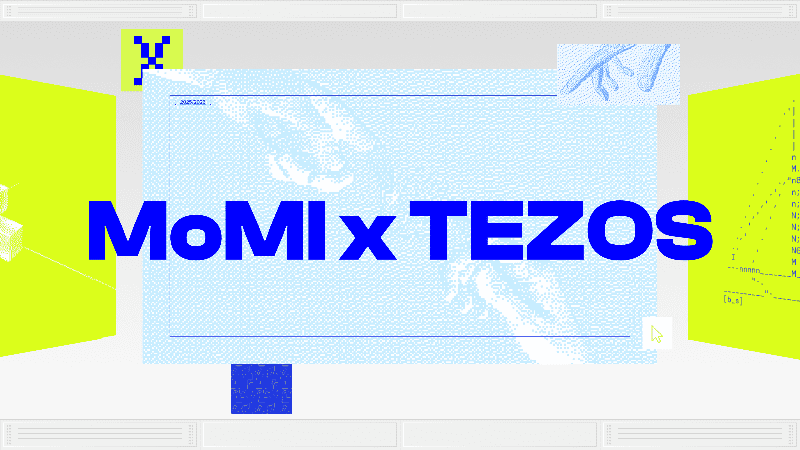
The Museum of the Moving Image (MoMI) and the Tezos Foundation are deepening their collaboration with a new cycle of commissions on the Museum’s Herbert S. Schlosser Media Wall, running from November 2025 through January 2027. Building on their successful 2024 partnership, this initiative invites artists to explore blockchain technology as a creative medium, while engaging the public through workshops, live events, and a fellowship program.
Five artist pairs will present projects over the two-year cycle, starting with contemporary artist James Bloom and generative photography pioneer Gottfried Jäger. Their opening commission revisits Jäger’s structural approach from 1967, creating networked digital images that situate blockchain within a historical lineage of system-based art. Following this, Canadian artist and researcher Sarah Friend collaborates with South Korean–born web artist Yehwan Song, Senegalese-Lebanese artist Linda Dounia pairs with blockchain veteran Rhea Myers, and Swedish conceptualist Jonas Lund teams with Japanese-born musician and visual artist Yoshi Sodeoka.
Central to the program is the FA2 Fellowship, which introduces participants to Tezos’ FA2 smart contract standard. This framework allows artists to manage multiple digital assets, perform batch operations, and interact with low-cost transactions, making it ideal for complex, generative, and interactive projects. Fellowship participants gain mentorship from Tezos developers, engage in workshops, and produce “production artifacts” such as source code, sketches, or generative tools. Eight artifacts will be minted on Tezos and made publicly available at no cost, documenting experimentation and fostering accessibility.
The program also offers microgrants ranging from $500 to $1,000, supporting artists in developing full projects from workshop explorations. The cycle culminates with two finalists commissioned for a two-month exhibition on the Media Wall, bridging technical experimentation with public presentation.
“Since the days of hic et nunc, I’ve hoped to see more artists engage with the Tezos blockchain itself as a behavioral and performative component of their work,” said Regina Harsanyi, MoMI’s Associate Curator of Media Arts. Aleksandra Artamonovskaja, Head of Arts at Trilitech (Tezos R&D Hub), emphasized the transformative potential: “We’re handing artists a set of resources that allow the blockchain itself to become part of the artwork—interactive, experimental, and alive. MoMI provides the perfect curatorial context for this vision.”
This FA2-focused initiative builds upon Museum Without Walls, the MoMI-Tezos collaboration launched in 2024, which democratized art collection by allowing visitors to mint digital fragments from artists at no cost. Previous programs, such as Compositions in Code: The Art of Processing and p5.js, paired pioneering code artists with emerging talent, celebrating computation as a medium. With the new cycle, MoMI and Tezos continue to champion blockchain’s expanding role in contemporary art, merging technology, creativity, and public engagement in groundbreaking ways.