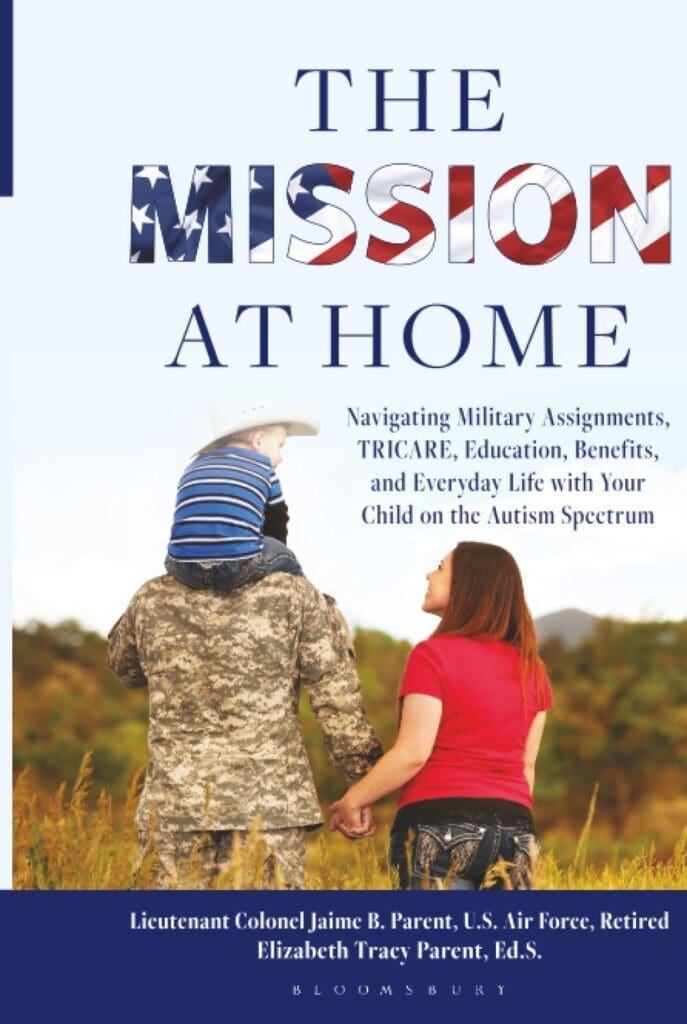
There are millions of families navigating life with autism—estimated at 1 in 127 people globally. But for military families, the challenge is often magnified by constant relocation, deployments, and the unpredictability of service life. A new book, The Mission at Home, aims to meet that reality head-on with practical, experience-driven guidance.
Written by retired U.S. Air Force Lt. Col. Jaime B. Parent and educator and autism specialist Elizabeth Tracy Parent, the book offers a comprehensive roadmap for raising a child on the autism spectrum while navigating military life. Drawing from their own lived experience, the Parents tackle a gap many families know too well: the disconnect between available services and actual accessibility.
Military families often face a cycle of restarting—new schools, new healthcare providers, new support systems—with every move. For children on the autism spectrum, who often rely on routine and consistency, that disruption can be especially difficult. The Mission at Home addresses this head-on, offering strategies to create stability even when circumstances are constantly shifting.
The book goes beyond general advice, diving into the complexities of systems like TRICARE and the Exceptional Family Member Program (EFMP), while also offering guidance on education advocacy, financial planning, and long-term care. It’s not just about surviving military life—it’s about building a sustainable framework that supports both the child and the family over time.
Tracy Parent highlights a key issue many families face: even when services exist, navigating eligibility, waitlists, and varying state systems can feel like an ongoing battle. That bureaucratic burden, layered on top of military responsibilities, often leaves families overwhelmed and underserved. The book aims to reduce that strain by equipping readers with clear, actionable tools.
At its core, The Mission at Home reframes what it means to serve. As Jaime Parent emphasizes, the “mission at home” carries just as much weight as any duty assignment. That perspective resonates in a broader cultural moment where conversations around autism awareness are evolving into calls for deeper support, inclusion, and systemic change.
Published by Bloomsbury, the book arrives at a critical time, offering not just empathy but a blueprint for action. For military families raising children with autism, it provides something often in short supply: clarity, continuity, and a sense that they are not navigating this journey alone.