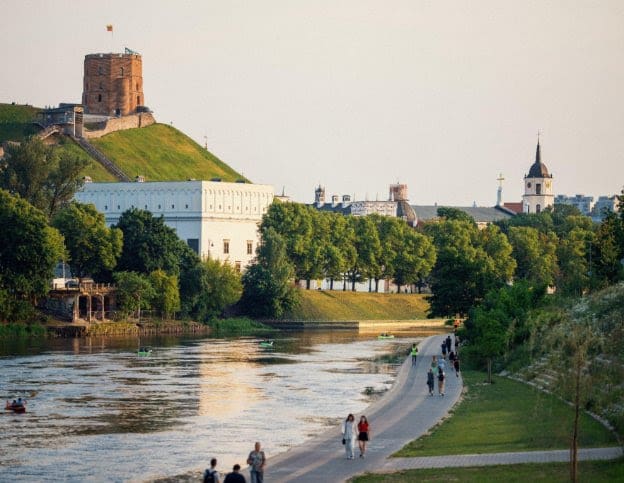
As travelers increasingly seek destinations that blend urban exploration with meaningful outdoor experiences, Lithuania’s capital city is gaining attention for an unexpected reason: wildlife.
Often celebrated for its historic architecture and vibrant cultural scene, Vilnius is also becoming a destination for nature enthusiasts who want to experience biodiversity without venturing far from a city center. With summer travel season approaching, the Lithuanian capital is highlighting a range of natural attractions that are drawing birdwatchers, wildlife lovers, and eco-conscious travelers.
Unlike many major European cities, Vilnius has successfully integrated nature into its urban landscape. Approximately 35% of the city is covered by forests, while rivers, parks, and protected natural areas provide habitats for a remarkable variety of wildlife.
One of the city’s most notable distinctions is its bird population. Experts have recorded 81 bird species within city limits, one of the highest totals among European capitals. Visitors may spot a range of species, including the red-breasted flycatcher, corncrake, and marsh harrier, all of which are protected under European Union conservation guidelines.
Birdwatching has become one of the fastest-growing segments of nature tourism globally, and Vilnius offers an accessible environment for both experienced birders and casual observers. Areas such as Pilaitė have become particularly popular due to their rich biodiversity and proximity to residential neighborhoods.
The city’s waterways are another environmental success story. Flowing through Vilnius, the Vilnelė River boasts exceptionally clean water conditions, supporting species that typically require pristine habitats. Trout, grayling, and salmon all thrive in the river.
Perhaps most remarkably, salmon travel up to 500 kilometers from the Baltic Sea each year to spawn in the Vilnelė. According to local biodiversity experts, the river’s rocky bed and oxygen-rich waters create ideal spawning conditions rarely found in urban environments.
Wildlife enthusiasts may also be surprised to discover that Vilnius is home to some of Europe’s most significant bat populations. The city’s Antakalnis bunker and Paneriai tunnel serve as important hibernation sites for several bat species, including the rare European barbastelle, one of the European Union’s most protected mammals.
During warmer months, bats can frequently be seen hunting insects near the Neris River and in parks such as Verkiai.
As biodiversity continues to decline across many parts of Europe, Vilnius offers an example of how cities can support thriving ecosystems while maintaining modern urban life. For travelers looking to combine culture, history, and wildlife in a single destination, the Lithuanian capital is proving that nature can be found in some of the most unexpected places.