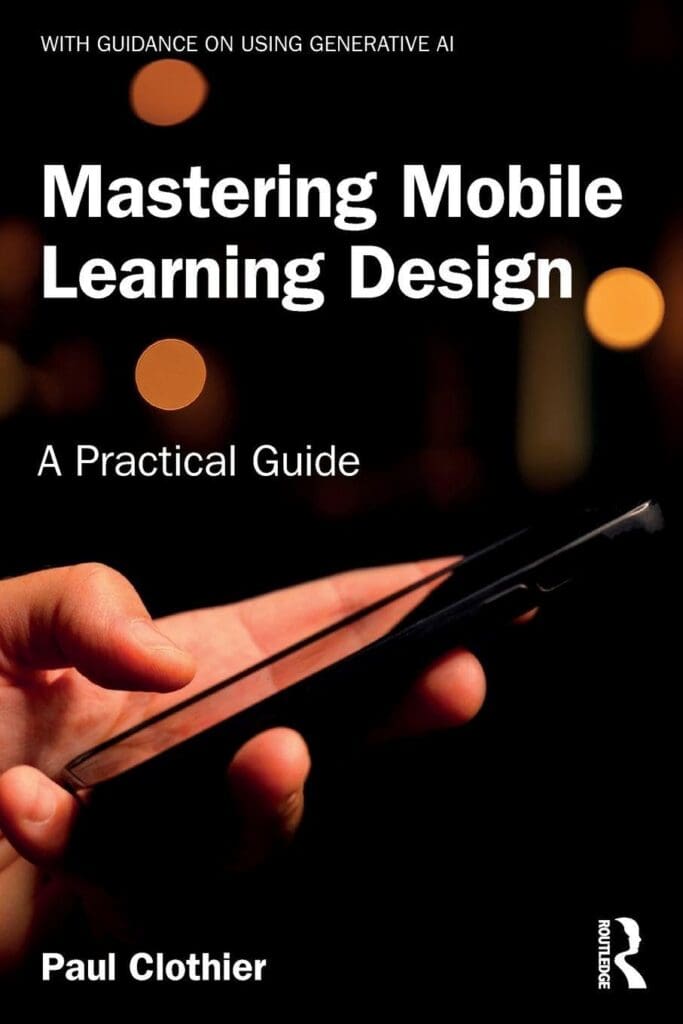
As smartphones continue to dominate the way people consume information, educators and instructional designers face a growing challenge: how do you create learning experiences that capture attention and deliver value on a small screen?
Instructional design veteran Paul Clothier tackles that question in his new book, Mastering Mobile Learning Design: A Practical Guide, offering a roadmap for creating effective learning experiences designed specifically for today’s mobile-first audiences.
Release on April 23 by Routledge, the book draws on Clothier’s more than four decades of experience in instructional design, including over 10 years spent at Apple creating mobile learning solutions for the company’s global sales teams. Now an instructor at the University of Cambridge, Clothier combines industry expertise with academic insight to address one of the most significant shifts in modern education and workplace training.
According to Clothier, many organizations still treat mobile learning as a scaled-down version of desktop e-learning, an approach that often fails to meet the needs of learners who access content while multitasking, commuting, or working in fast-paced environments.
“Designing for smartphones requires a different approach,” Clothier explains. “Learners are busy, their attention is divided, and they need clear, useful information in the moment.”
In Mastering Mobile Learning Design, Clothier outlines practical strategies for creating concise, engaging learning experiences that work within the limitations—and opportunities—of mobile devices. The book offers step-by-step guidance on using video, graphics, storytelling, and interactive elements to create focused learning moments that can be completed quickly and applied immediately.
The guide is aimed at instructional designers, chief learning officers, trainers, educators, and anyone responsible for developing learning programs. Readers will find advice on integrating learning into everyday workflows, using social interaction and gamification to encourage participation, and designing performance-support tools that help users solve problems in real time.
The book also explores the growing role of generative artificial intelligence in learning design. Clothier demonstrates how AI tools can assist with researching topics, drafting content, personalizing learning materials, and improving efficiency throughout the design process.
Looking ahead, the author examines emerging trends in AI-powered learning, adaptive content delivery, and intelligent support systems that could shape the future of education and workplace training.
Ultimately, Clothier argues that successful mobile learning is about respecting learners’ time and attention.
“The people you’re designing for are busy, and they need something useful right now,” he says. “Your job is to make sure that what you create is clear, relevant, and worth their time.”
For professionals seeking to improve engagement in an increasingly mobile world, Mastering Mobile Learning Design offers timely and practical guidance.