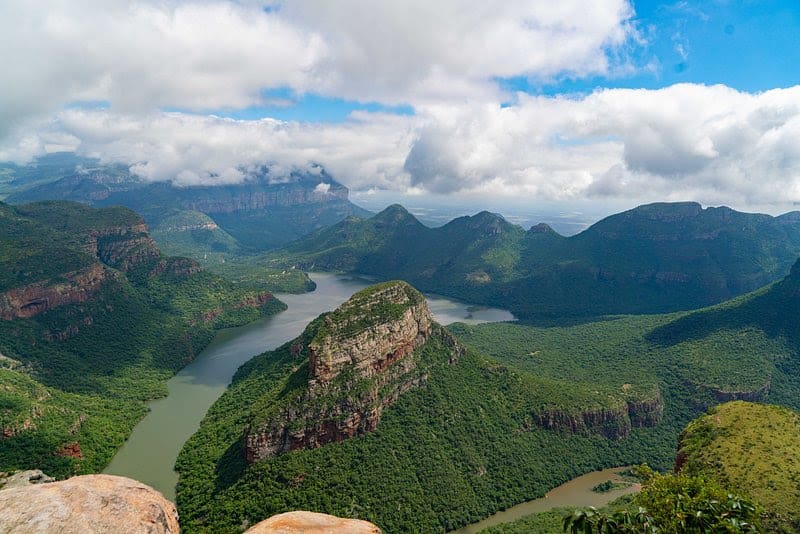
Travelers visiting South Africa’s famed Blyde River Canyon have a new reason to linger a little longer. Just minutes from one of the world’s largest canyons lies the Cape Vulture Nature Reserve, home to one of the world’s largest breeding colonies of endangered Cape Vultures and the gateway to South Africa’s largest UNESCO biosphere region.
Located near Hoedspruit in Mpumalanga Province, the reserve protects more than 700 breeding pairs of Cape Vultures (Gyps coprotheres), one of Africa’s most threatened bird species. The colony serves as the centerpiece of the Cape Vulture Nature Reserve, where visitors can observe the birds from purpose-built hides and learn about conservation efforts aimed at preserving the species.
The reserve also serves as an entry point to the Kruger to Canyons (K2C) Biosphere Region, South Africa’s largest UNESCO-designated biosphere. Recognized internationally for its work in sustainable development and conservation, the biosphere links protected landscapes, wildlife habitats, and local communities across Limpopo and Mpumalanga provinces.
While Blyde River Canyon is often promoted as the world’s third-largest canyon and the largest “green canyon,” conservationists say the surrounding region offers a broader experience that combines ecotourism with outdoor adventure.
Within a 30- to 40-minute drive of the reserve, visitors can reach the dramatic cliffs and viewpoints of Blyde River Canyon, including popular stops such as God’s Window, Three Rondavels, Wonder View, and Bourke’s Luck Potholes. The Panorama Route, one of South Africa’s best-known scenic drives, connects many of these attractions through winding mountain roads and lush landscapes.
Adventure travelers can choose from guided boat cruises on Blyde Dam, rock climbing, abseiling, white-water rafting, zip-lining, quad biking, horseback riding, and hiking trails that showcase waterfalls and panoramic views throughout the canyon.
For wildlife enthusiasts, Kruger National Park lies roughly an hour away, offering opportunities to spot the Big Five—lion, leopard, elephant, rhinoceros, and buffalo—on guided safaris or self-drive excursions. Visitors can also experience local culture through nearby villages featuring traditional music, crafts, and cuisine.
The combination of wildlife conservation, outdoor recreation, and cultural experiences has helped position the region as one of southern Africa’s premier ecotourism destinations.
At Cape Vulture Nature Reserve, education is a central part of the experience. Guided tours explain the ecological importance of vultures, which help prevent the spread of disease by consuming animal carcasses, while highlighting the threats they face from poisoning, habitat loss, and collisions with power infrastructure.
As travelers increasingly seek destinations that combine nature, sustainability, and authentic experiences, the Cape Vulture Nature Reserve and the surrounding Kruger to Canyons Biosphere offer a compelling alternative to traditional safari itineraries—one where conservation and adventure go hand in hand.
Nice, informative piece — clear and engaging. Do you know if there are guided vulture-viewing times or best months to visit for both birdwatching and nearby safaris? I checked https://weather.world-prices.com/south-africa/weather/ to get an idea of seasonal conditions and the 14-day forecast, though I’m not sure it’s the only source.