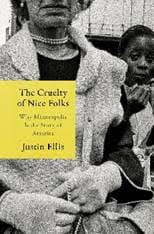
In the years since George Floyd’s murder, Minneapolis has become a national symbol in the ongoing debate over policing, racial justice and the gap between America’s ideals and the realities experienced by Black Americans. In his new book, The Cruelty of Nice Folks: Why Minneapolis Is the Story of America, journalist Justin Ellis takes a deeply reported and personal look at how those contradictions developed—and why they remain unresolved.
Published June 16, 2026, by Harper, the book challenges Minneapolis’ reputation as a progressive stronghold. Ellis, a Minneapolis native and co-owner of the worker-owned media company Defector, examines how systemic racism has shaped the city’s housing, education and political systems, even as Minneapolis has cultivated an image of tolerance and progress.
The book’s central argument reaches beyond Minnesota. Ellis explores the culture often described as “Minnesota nice,” suggesting that a preference for politeness and civility can sometimes come at the expense of accountability. For Black residents, that dynamic has helped allow longstanding inequities to persist while making the city’s racial contradictions harder to confront.
Ellis first addressed Minneapolis’ racial tensions in a widely read 2020 essay for The Atlantic, written in the aftermath of Floyd’s killing. At a moment when people across the country were asking how such an event could happen in a city widely viewed as progressive, Ellis argued that the more revealing question was why so many people believed Minneapolis was somehow incapable of producing such a crisis.
In The Cruelty of Nice Folks, he returns to that question with a broader historical perspective, blending reporting, personal experience and an examination of the systems that helped shape the city.
A powerful epilogue brings the story into 2026, asking what Minneapolis’ years of protest and political upheaval have actually changed. Ellis finds a community that has developed a stronger tradition of dissent and collective action, while continuing to wrestle with its identity and unresolved racial inequalities.
The book ultimately asks a question with implications far beyond Minneapolis: What kind of “normal” should America seek to rebuild after a period of reckoning?
Ellis’ work has appeared in ESPN, The Atlantic, The New York Times, Boston Globe and GQ. His television credits include the Netflix docuseries How to Fix a Drug Scandal and Wyatt Cenac’s HBO series Problem Areas.
The Cruelty of Nice Folks offers a timely examination of race, power and the difference between a city’s self-image and the lived experiences of its residents.