What if the financial decisions people make are influenced by beliefs they developed long before they ever earned their first paycheck?
Atlanta-based executive coach and strategic leadership expert Dr. Sam Adeyemi argues that attitudes toward money, success and prosperity can be shaped by family, community and early life experiences — sometimes creating patterns that can be difficult to recognize and change.
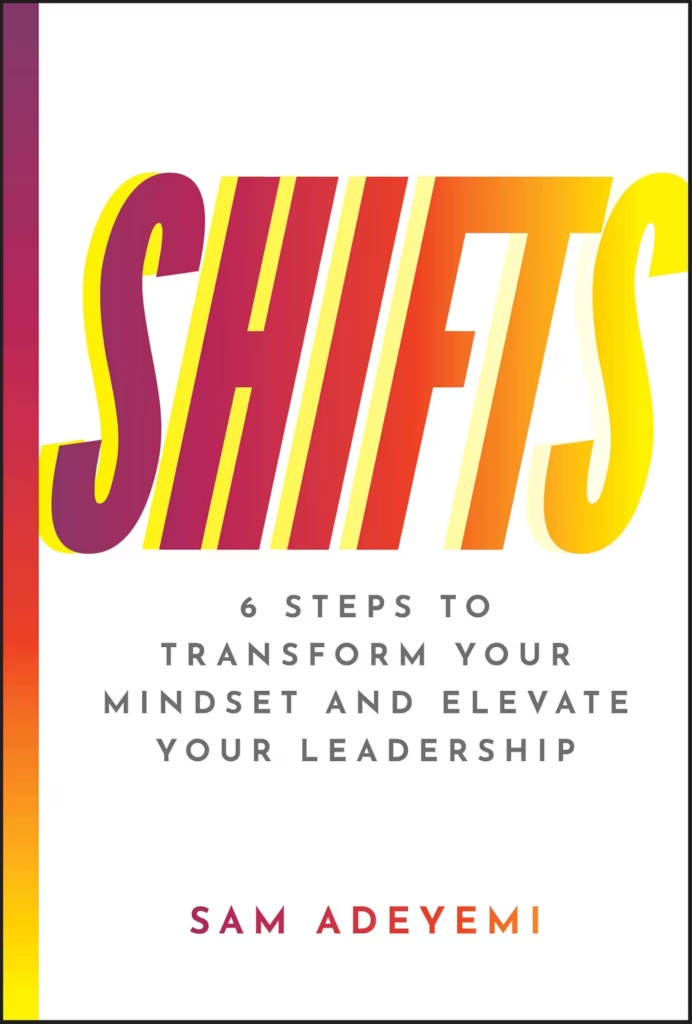
Adeyemi, author of SHIFTS: 6 Steps to Transform Your Mindset and Elevate Your Leadership, says people can consciously want financial success while subconsciously operating according to beliefs rooted in scarcity.
“Many times, the goals people set with their conscious mind are not in alignment with their programming,” Adeyemi said.
He describes those deeply embedded beliefs as “roots” that influence the “fruit” people ultimately produce. Someone may want greater wealth, for example, but continue making decisions based on ideas about money that were absorbed during childhood.
Adeyemi says those ideas can come from growing up in a financially disadvantaged household or community, observing how family members handled money, or spending time in environments where certain expectations about wealth and success were common.
The result, he argues, can be a disconnect between what people say they want and the decisions they repeatedly make.
Changing the Roots
Adeyemi encourages people to examine their financial mindset rather than focusing exclusively on surface-level results such as income, career advancement or business performance.
One factor he emphasizes is environment.
“Your seed may be perfect, but the soil determines its full potential,” he said, pointing to the influence that surroundings can have on personal development.
That examination also includes identifying the difference between scarcity thinking and abundance thinking. For Adeyemi, recognizing the beliefs behind financial choices is an important step toward changing them.
His approach is outlined in his SHIFTS model, which focuses on the progression from what people see and hear to the insights they develop, the decisions they formulate, the actions they implement and, ultimately, the results they achieve.
“Transformation begins with what we See and Hear,” Adeyemi said. “What we repeatedly expose ourselves to influences our Insights, which shape the way we Formulate our decisions.”
The discussion may be particularly relevant during International Day for the Eradication of Poverty on Oct. 17 and Poverty Awareness Month in January, when conversations about financial hardship often extend beyond income to include access, opportunity and economic mobility.
Adeyemi has built a large international audience around leadership and personal development. He is CEO of Sam Adeyemi, GLC, Inc., and founder and executive director of Daystar Leadership Academy, which has graduated more than 52,000 alumni from its programs. More than 3 million people follow his social media platforms, according to his organization.
His latest book, SHIFTS, published by Wiley, explores mindset transformation and leadership.
For Adeyemi, changing financial outcomes begins with examining the beliefs underneath them — and determining whether those beliefs are helping create the future a person actually wants.