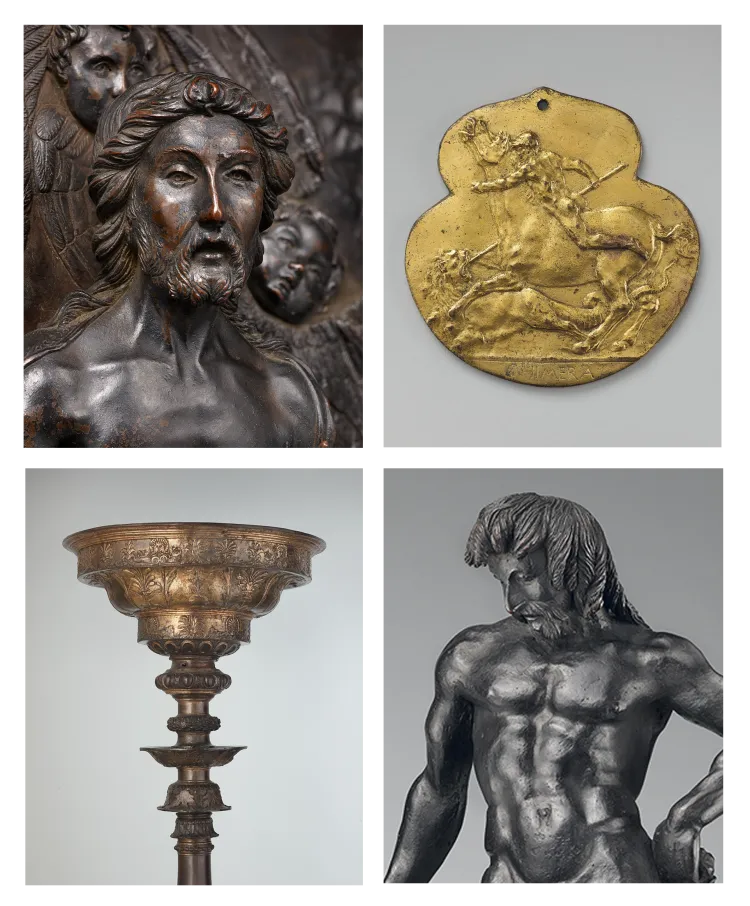
The Frick Collection will shine a spotlight on one of the lesser-known achievements of the Italian Renaissance this fall with Siena: The Art of Bronze, 1450–1500, the first exhibition dedicated entirely to Siena’s remarkable tradition of bronze sculpture.
Opening in New York, the exhibition will bring together nearly 40 works spanning statues, reliefs, candelabra, medals and other objects created during a pivotal period in Sienese art. The exhibition features works by influential sculptors including Donatello, Vecchietta and Francesco di Giorgio. Many of the pieces are being loaned from collections in Tuscany and have never previously been exhibited outside the region, making the presentation an especially significant opportunity for American audiences.
Organized by Giulio Dalvit, associate curator at the Frick, the exhibition examines both the artistic beauty of bronze and the sophisticated technical processes required to create it. It also explores the political and economic challenges faced by artists and workshops in Siena during the second half of the 15th century.
“Between 1450 and 1500, almost nowhere in Italy did local artistic traditions rely so heavily on a single medium as Siena’s did on bronze,” Dalvit said. The exhibition, he noted, brings overdue attention to Sienese bronze sculpture and its importance to Renaissance art history.
The works come from prominent institutions across Europe and the United States. Italian lenders include the Museo Nazionale del Bargello in Florence, Museo Nazionale di Capodimonte in Naples, Galleria Nazionale dell’Umbria in Perugia, Museo Diocesano Albani in Urbino and Museo Civico in Siena. Additional loans come from the National Gallery of Art in Washington, D.C., the British Museum and Victoria and Albert Museum in London, as well as collections in Berlin, Dresden and Vienna.
The exhibition also seeks to challenge the long-standing perception of Siena primarily as a center of medieval painting. Located in Tuscany, the hilltop city became an important hub of artistic and cultural exchange partly because of its position along the Via Francigena, a major pilgrimage route connecting Rome with northern Europe.
Siena eventually fell under Florence’s political dominance following its defeat in the 1550s, contributing to its later reputation as a city rooted in the medieval past. Siena: The Art of Bronze, 1450–1500 offers a different perspective, highlighting the city’s innovation and the extraordinary range of its sculptural production.
Visitors will encounter everything from intimate, jewel-like objects and intricate reliefs to ambitious life-size sculptures, revealing how Renaissance artists pushed bronze to its technical and artistic limits.
An accompanying catalogue, authored by Dalvit with contributions from international scholars, will further examine Siena’s bronze tradition and its place in Renaissance art history.