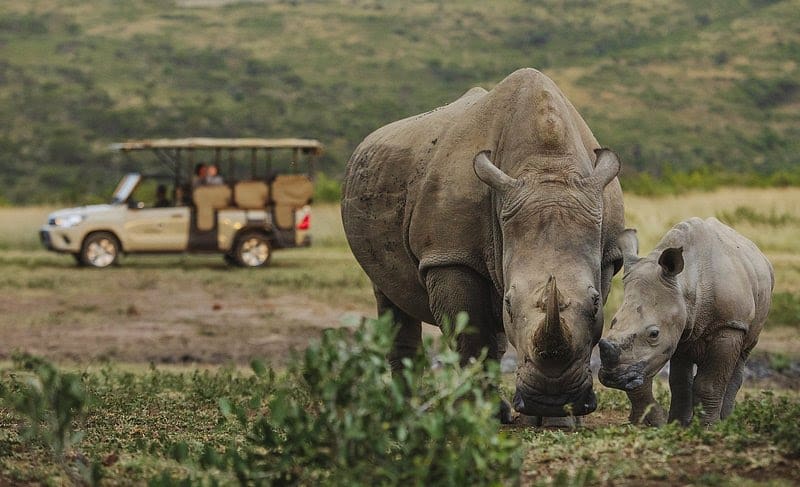
A stay at a luxury safari lodge can do more than offer wildlife encounters. At Rhino Ridge Safari Lodge in South Africa’s Hluhluwe-iMfolozi Park, tourism revenue helps support conservation initiatives protecting one of the continent’s most important rhino populations.
The park recorded a 52% reduction in rhino poaching in 2026, according to the lodge’s announcement. Located in KwaZulu-Natal, Hluhluwe-iMfolozi is historically significant for its role in saving the southern white rhino from extinction. Today, conservation efforts combine anti-poaching operations, habitat management and community partnerships.
Rhino Ridge Safari Lodge operates within the reserve, connecting visitors to the landscape while helping fund its protection. Guest stays contribute to ranger patrols, surveillance technology, specialist canine teams and community initiatives. The lodge also supports local employment, with many staff members coming from the neighboring Mpembeni community.
The conservation model recognizes that protecting wildlife requires more than safeguarding animals. Local communities must also benefit from tourism and have opportunities to participate in conservation-related work.
The park’s efforts extend beyond southern white rhinos to include the critically endangered black rhino. Through its partnership with the World Wide Fund for Nature’s Black Rhino Range Expansion Project, the reserve supports initiatives designed to establish viable breeding populations, improve genetic diversity and increase population growth through managed translocations.
The two species present different conservation challenges. White rhinos primarily graze on grasses and are often found in open areas, while black rhinos browse on shrubs and other vegetation, frequently occupying denser habitats. Their preference for thicker vegetation can make them more difficult to locate and monitor.
Rangers employ a combination of ground patrols, aerial surveillance, horseback patrols and specialist canine teams to help detect and deter poaching.
Visitors can experience the reserve through guided game drives, walking safaris and community tours. Guides also explain the history of rhino conservation in the region, including Operation Rhino, the initiative associated with conservationist Dr. Ian Player that helped establish southern white rhino populations beyond their remaining stronghold.
The lodge emphasizes responsible wildlife encounters, prioritizing animal welfare and guest safety by keeping sightings quiet and minimizing disturbance. Its architecture follows a similar philosophy, blending into the landscape while providing privacy and views of the surrounding reserve.
Financial contributions also come through park entrance fees paid to Ezemvelo KZN Wildlife and a levy supporting the Isibindi Foundation, which funds community and conservation projects.
For travelers seeking a safari experience with a conservation component, Rhino Ridge offers an opportunity to connect tourism spending with wildlife protection. Its model illustrates how responsible travel can help support the people, infrastructure and long-term initiatives needed to protect Africa’s threatened species.
For reservations and information, visit Isibindi.co.za.