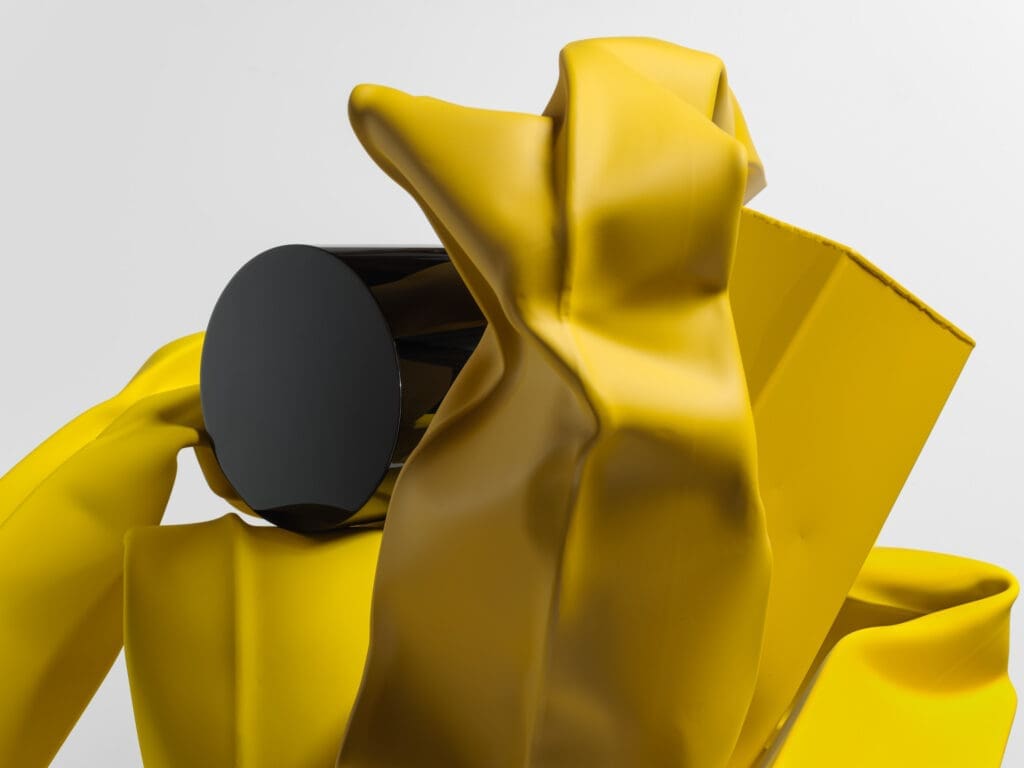
American artist Carol Bove is taking over the iconic rotunda of the Solomon R. Guggenheim Museum with the largest exhibition of her career, offering visitors an immersive look at more than 25 years of groundbreaking work.
Running through August 2, Carol Bove marks the artist’s first full museum survey and transforms the entire Frank Lloyd Wright-designed rotunda into a dynamic environment of monumental sculpture, paintings, installations, and works on paper.
The ambitious exhibition reimagines the museum’s famous spiral architecture as part of the artwork itself, placing Bove’s creations in direct conversation with Wright’s iconic design. Rather than simply filling the space, the exhibition uses the building’s open sightlines, curves, and vertical flow as an active element of the artistic experience.
“This survey exhibition marks the first opportunity to see the full arc of Bove’s career,” said Katherine Brinson, Senior Curator of Contemporary Art and Director of Global Initiatives at the Guggenheim. “It coheres into a single artistic statement, animating the Frank Lloyd Wright spiral with color and form while creating opportunities for rest and active play.”
Known for her inventive approach to scale, material, and perception, Bove’s practice spans intimate paper collages and assemblages of paperback books to towering metal sculptures that dominate space. Her work often explores how viewers relate to objects and environments, challenging expectations of form and movement.
A major highlight of the exhibition is the debut of two entirely new bodies of work created specifically for the Guggenheim. These include a monumental series of steel “collage sculptures,” large-scale compositions designed for the rotunda, and a new group of wall-mounted aluminum panel works.
The show is arranged in reverse chronology, beginning with Bove’s newest sculptures on the lower ramps and winding backward through time to her earlier installations and drawings from the early 2000s at the top of the museum’s spiral. This structure allows visitors to experience both the evolution of her artistic language and the continuity of her core ideas.
Bove’s interest in surface, color, and spatial awareness makes the Guggenheim a particularly fitting venue. She has described the rotunda itself as a sculpture, and the exhibition treats it as such—blurring the line between architecture and artwork.
For New York’s spring art season, Carol Bove stands as one of the city’s most significant contemporary exhibitions, offering audiences a chance to see one of America’s leading artists reshape one of its most recognizable museum spaces.