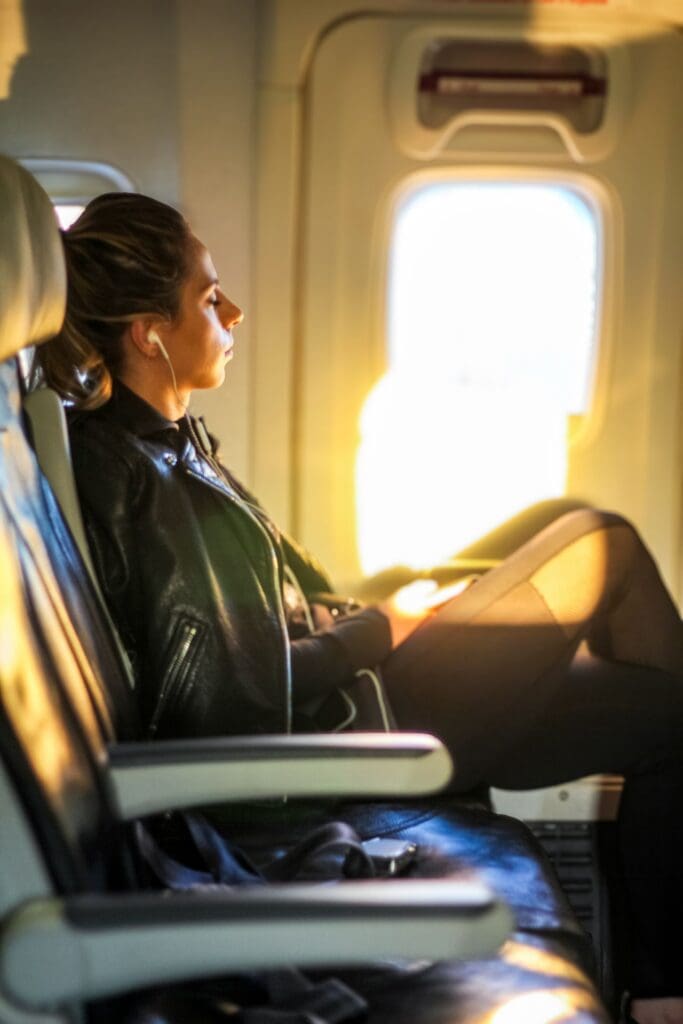
Your plane seat could affect more than your legroom. According to beauty experts, where you sit during a flight may also influence how dry, irritated or uncomfortable your skin feels when you reach your destination.
With millions of travelers taking summer vacations, Fresha, a beauty and wellness booking platform, has examined cabin conditions and expert advice to identify which seats may be better—or worse—for maintaining healthy-looking skin during a flight.
The window seat, often considered the best spot for travelers who want a view, may be one of the least friendly choices for your skin. Increased exposure to ultraviolet radiation at cruising altitude, combined with dry cabin air and reduced airflow near the aircraft wall, can contribute to moisture loss.
Cabin humidity can fall below 20%, creating an extremely dry environment. Recycled air, prolonged periods of sitting and exposure to UV rays can further challenge the skin barrier.
Danielle Louise, a beauty expert on the Fresha app, says travelers often focus on their skincare products while overlooking their seating location.
According to Fresha’s analysis, mid-cabin aisle seats may offer the best conditions for skin. These seats can provide more stable airflow and fewer temperature fluctuations, while being positioned away from the aircraft wall and making it easier for passengers to move around during longer flights.
The first and last five rows may be among the least favorable areas because airflow and humidity can fluctuate more significantly. Bulkhead seats offer additional legroom but may expose passengers to stronger airflow from nearby vents, potentially contributing to dryness.
Seats positioned above the wings may also have an advantage, with the aircraft’s structure helping minimize some changes in pressure and humidity during a flight.
Travelers can also take steps to protect their skin before boarding. Fresha recommends avoiding potentially irritating ingredients such as retinol, AHAs and BHAs for about 24 hours before flying, particularly for those with sensitive skin.
Applying a rich barrier cream before boarding can help lock in moisture, while a hydrating facial mist may be preferable to cleansing wipes, which can sometimes contribute to skin irritation.
Sunscreen remains important, even when traveling at night or sitting inside an aircraft. Travelers seated by windows can receive UV exposure at cruising altitude, making SPF an important part of an in-flight skincare routine.
Hydration should also begin before takeoff. Drinking water throughout the journey can help travelers avoid arriving with skin that feels dry and tight.
For summer travelers, choosing an aisle seat in the middle of the cabin may therefore offer more than convenience. It could also be a small step toward looking—and feeling—better after a long flight.