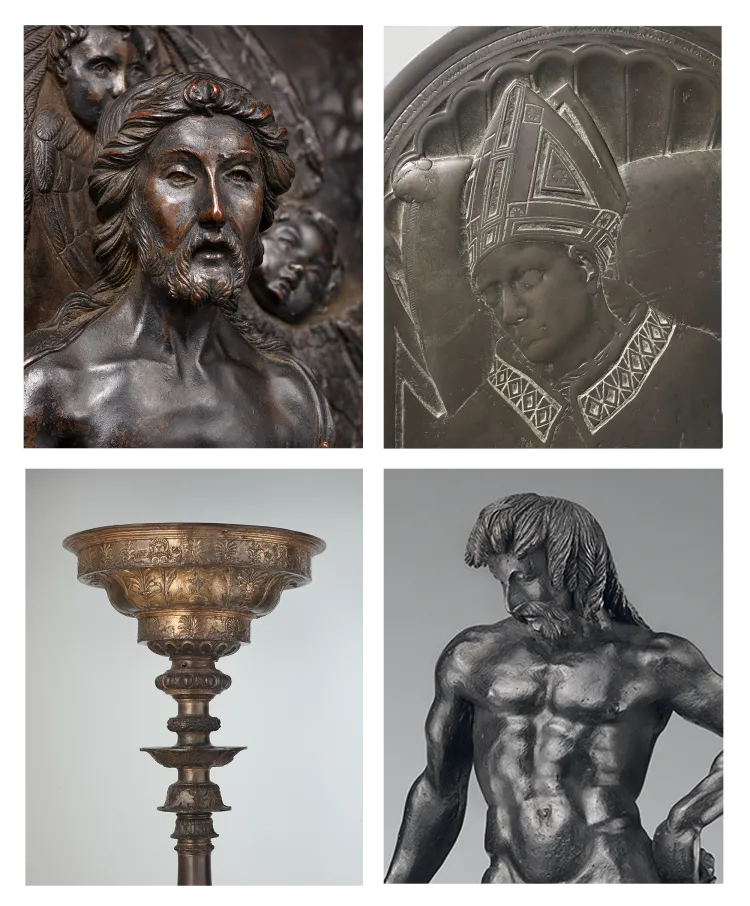
The Frick Collection is bringing renewed attention to an overlooked chapter of Italian Renaissance art with Siena: The Art of Bronze, 1450–1500, an exhibition showcasing the extraordinary craftsmanship and artistic innovation of Sienese sculptors during the second half of the 15th century.
Opening this fall in New York, the exhibition represents the first major presentation devoted exclusively to Siena’s achievements in bronze sculpture during this period. It features nearly 40 works, including statues, reliefs, candelabra and medals by influential Renaissance artists such as Donatello, Vecchietta and Francesco di Giorgio.
Many of the featured objects are rarely seen outside Tuscany, with several making their United States debut. The collection brings together important loans from prominent museums and institutions in Italy, the United Kingdom, Germany and the United States.
Organized by Giulio Dalvit, associate curator at The Frick Collection, the exhibition examines how bronze became a defining medium of artistic expression in Siena between 1450 and 1500. Visitors will gain insight into the technical skills, creative collaborations and political ambitions that helped establish the city as an important center of Renaissance sculpture.
The exhibition also challenges the traditional narrative of Renaissance art, which has largely emphasized Florence as the dominant center of artistic innovation. Located approximately 40 miles south of Florence, Siena developed its own distinctive artistic identity while maintaining cultural connections with its powerful neighbor.
Its location along the Via Francigena, an important pilgrimage route connecting Rome with France and England, helped establish Siena as a crossroads for artists, ideas and cultural exchange.
Despite its artistic achievements, Siena was later overshadowed by Florence following its defeat in the 1550s. The city consequently became associated with the medieval past rather than recognized for its contributions to Renaissance art.
Dalvit said the exhibition aimed to bring overdue recognition to Sienese bronze sculpture and demonstrate its importance in Renaissance art history.
In addition to presenting rarely exhibited masterpieces, the exhibition and its accompanying catalogue feature new research, discoveries and attributions that offer fresh perspectives on the authorship, dating and significance of several works. Dalvit also contributed to the catalogue alongside an international team of scholars.
The exhibition includes loans from institutions such as Florence’s Museo Nazionale del Bargello, London’s British Museum and Victoria and Albert Museum, and the National Gallery of Art in Washington, D.C.
A series of public programs, including lectures, artist talks, studio activities and concerts, will accompany the exhibition, giving visitors additional opportunities to explore Siena’s artistic legacy.
Through this presentation, The Frick Collection offers audiences a deeper understanding of the Renaissance and the remarkable bronze artistry that flourished beyond Florence.