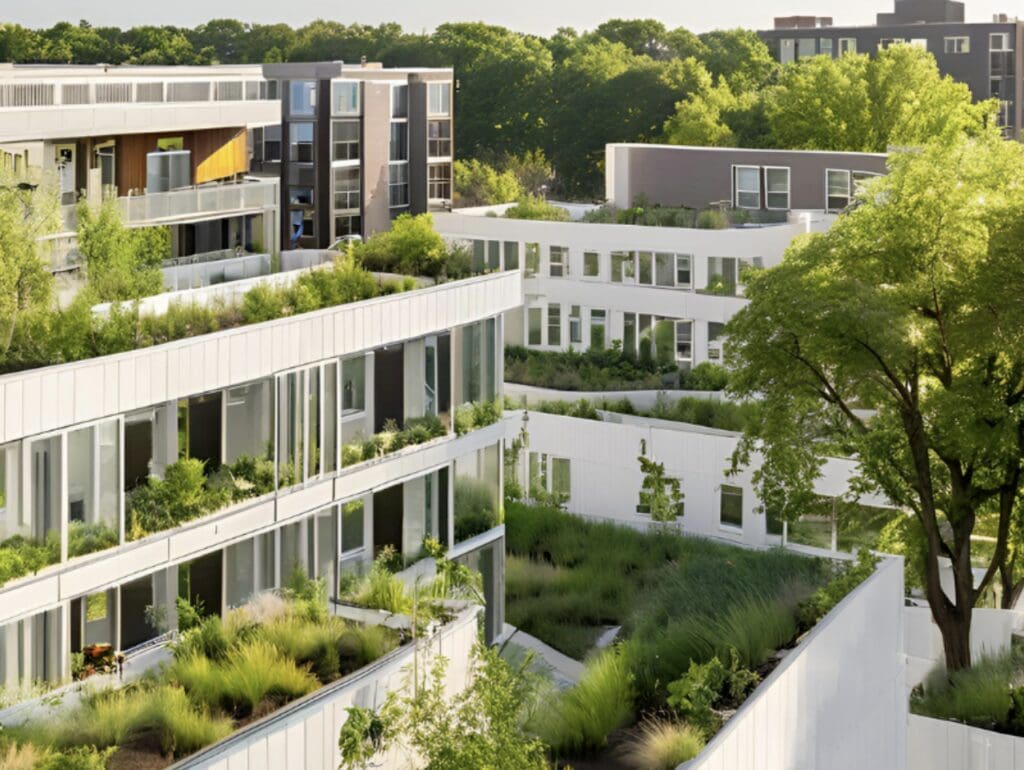
A historic Black church property on Chicago’s South Side is becoming the foundation for a $580 million mixed-use development designed to create housing, jobs and commercial opportunities while preserving Black ownership in a rapidly developing neighborhood.
Woodlawn Central, an eight-acre project led by developer J. Byron Brazier, broke ground Aug. 29 with Chicago Mayor Brandon Johnson and Cook County Board President Toni Preckwinkle in attendance. Located one block from the Obama Presidential Center, the development is being built on land owned by a Black church with a history spanning decades of investment and disinvestment in the community.
Brazier, grandson of Bishop Arthur M. Brazier and son of Bishop Byron T. Brazier of Apostolic Church of God, is leading the project. The development represents a model of community-centered investment in which a Black institution retains an ownership stake in land while participating directly in the economic opportunities created by redevelopment.
The first phase carries a projected investment of $134 million and will include 104 residential units, 22 of which will be designated as affordable housing for households earning 60% of the area median income. Plans also call for a 160-room hotel, retail space and parking. Completion is targeted for the second quarter of 2028.
The larger development is expected to include approximately 870 residential units, 215,000 square feet of office and retail space, a black box theater, a microgrid and a vertical greenhouse. Project projections also include approximately 700 permanent jobs and an overall affordability target of 30%.
The project team includes architecture and design firm Gensler, construction company Bowa and P3 Markets, which is involved in the development’s market strategy.
Beyond its size, Woodlawn Central raises important questions about who benefits when major investments arrive in historically underserved neighborhoods. The nearby Obama Presidential Center is expected to bring additional visitors, economic activity and attention to the South Side. Woodlawn Central’s ownership structure places a Black institution in a position to participate in the area’s changing economic landscape.
For Brazier, the development also offers a blueprint for other congregations and faith-based organizations that own valuable property. Churches with long-standing land holdings may have opportunities to use those assets to create housing, employment and commercial spaces while maintaining a connection to their communities.
The project’s approach highlights the potential of institutional land ownership as a tool for long-term wealth creation, particularly when Black-led organizations are involved in development decisions.
With construction underway, Woodlawn Central will be closely watched as an example of how a congregation’s land can become a platform for housing, business investment and economic participation across generations.